The opening call
A clarinet rises and bends into the piece like a city waking up: playful, elegant, and slightly outrageous.
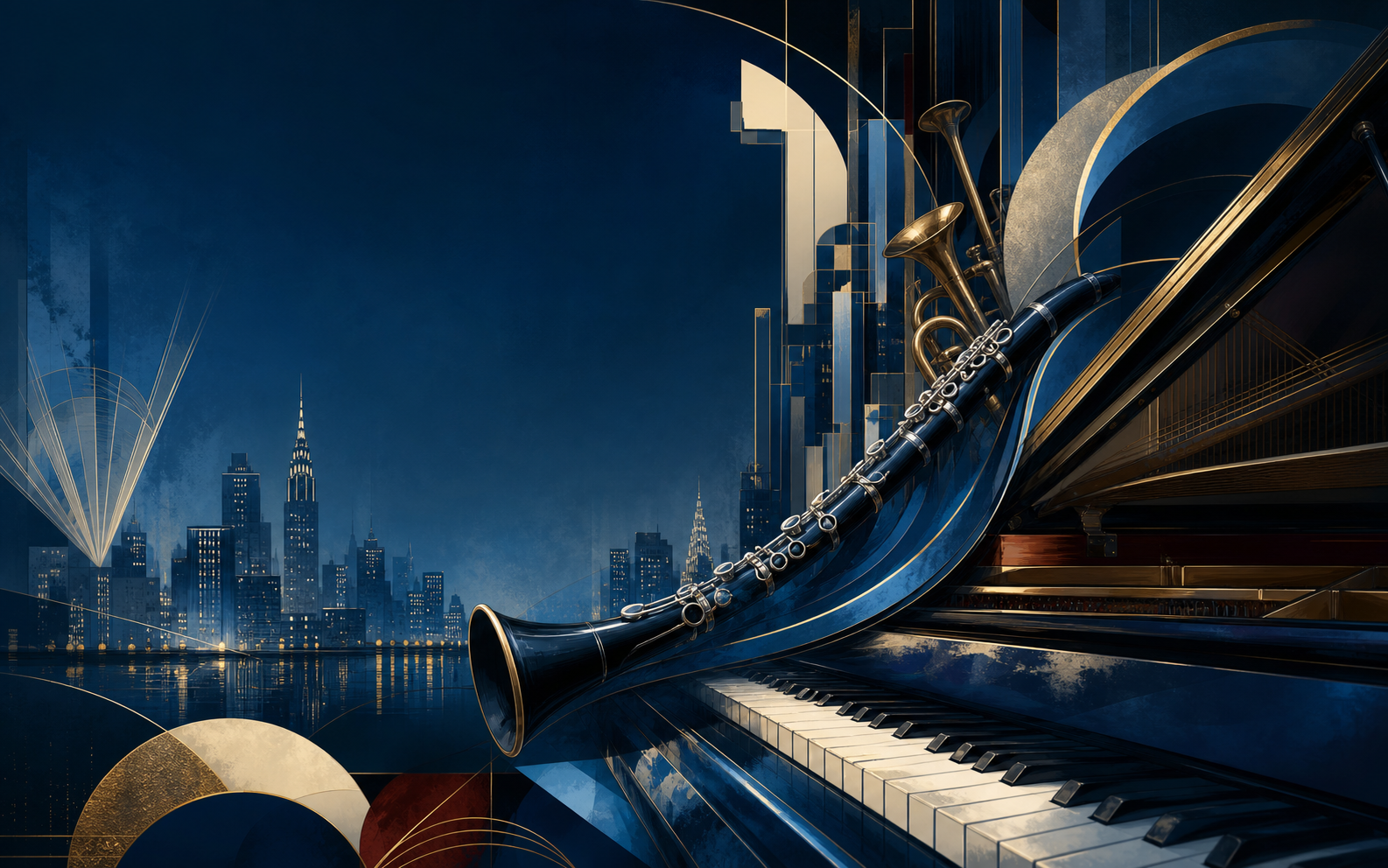
George Gershwin · 1924
A jazz-age concert rhapsody where classical form, piano brilliance, and the pulse of New York meet in one unmistakable opening clarinet glissando.
Rhapsody in Blue is a concert work by George Gershwin that blends the language of classical music with jazz harmony, syncopation, and popular song. Written for piano and jazz band, then later heard in orchestral versions, it helped define a modern American sound: urbane, restless, lyrical, and instantly recognizable.
The piece premiered on February 12, 1924, at Aeolian Hall in New York during Paul Whiteman's concert, An Experiment in Modern Music. Gershwin played the piano part himself.
Its famous opening clarinet gesture was shaped during rehearsal, turning a written scale into a swooping glissando that became one of the most recognizable beginnings in twentieth-century music.
A clarinet rises and bends into the piece like a city waking up: playful, elegant, and slightly outrageous.
The solo piano moves between virtuoso display, intimate song, and rhythmic snap, giving the work its human voice.
Jazz-inflected chords and melodic bends color the classical frame, creating tension between polish and improvisatory heat.
Rhapsody in Blue remains a touchstone for American music, concert programming, film, advertising, and cultural memory. Its influence comes from the way it treats the city as sound: traffic, glamour, ambition, and melancholy compressed into a concert piece.
For listeners discovering Gershwin, it is often the doorway: accessible on first hearing, richer each time the themes return.